
Table of Contents
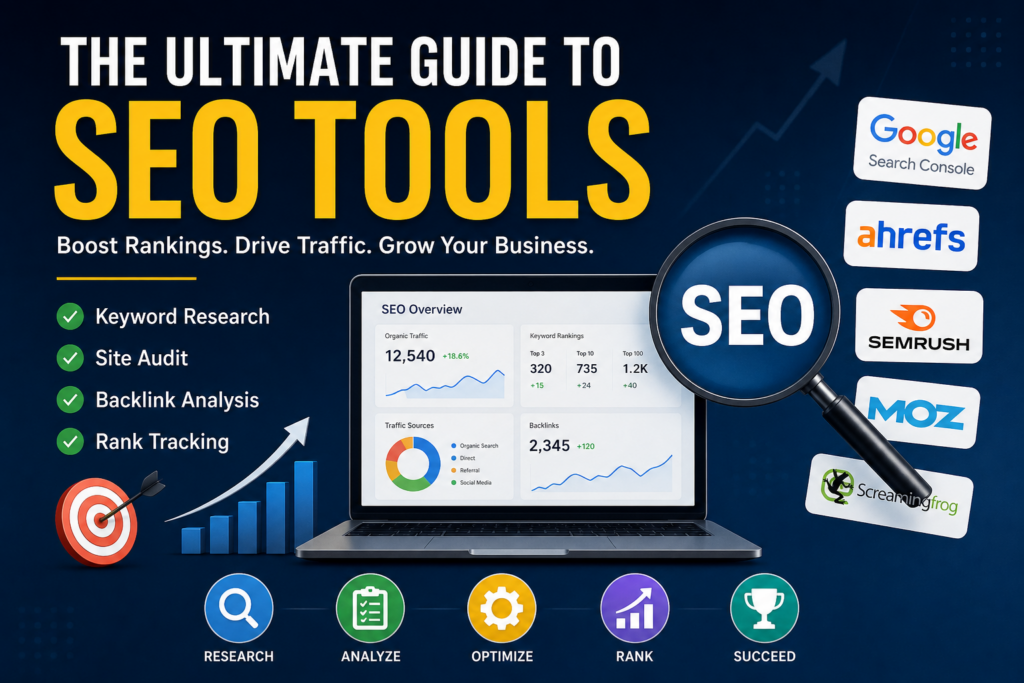
Discover the most powerful SEO tools to boost your website rankings, increase traffic, and improve online visibility. This comprehensive guide explores free and paid SEO tools, their features, and how to use them effectively for long-term success.
SEO Tools
Search engine optimization has become a vital part of any digital strategy. Businesses, bloggers, and marketers all rely on SEO to attract organic traffic. However, SEO is not just about keywords anymore. It involves technical audits, content optimization, competitor analysis, and more.
SEO tools make this process easier. They help you analyze data, track performance, and uncover opportunities. Without the right tools, managing SEO becomes time-consuming and inefficient.
In this guide, you will explore the best SEO tools available today. You will also learn how to use them effectively to grow your online presence.
What Are SEO Tools and Why They Matter
SEO tools are software applications designed to help improve a website’s visibility on search engines. They provide insights into keywords, backlinks, site health, and user behavior.
These tools matter because search engines use complex algorithms. It is nearly impossible to optimize a website manually without data. SEO tools simplify this process by offering clear recommendations.
They also save time. Instead of guessing what works, you can rely on data-driven decisions. As a result, your strategy becomes more effective and consistent.
Types of SEO Tools
SEO tools come in different categories. Each type focuses on a specific aspect of optimization.
Keyword Research Tools
Keyword research tools help you find search terms people use online. They also show search volume, competition, and trends.
Popular tools include Google Keyword Planner, Ahrefs, and SEMrush. These tools help you target the right audience.
On-Page SEO Tools
On-page tools analyze your content. They suggest improvements for titles, headings, and keyword usage.
Examples include Yoast SEO and Surfer SEO. These tools ensure your content is optimized for both users and search engines.
Technical SEO Tools
Technical tools focus on website performance. They check speed, mobile usability, and indexing issues.
Google Search Console and Screaming Frog are widely used in this category.
Backlink Analysis Tools
Backlinks are a key ranking factor. These tools analyze your link profile and identify opportunities.
Ahrefs and Moz are excellent options for backlink analysis.
Rank Tracking Tools
Rank trackers monitor your keyword positions. They show how your rankings change over time.
Tools like SERPWatcher and AccuRanker provide accurate tracking data.
Best Free SEO Tools
Not everyone has a budget for premium tools. Fortunately, many free options offer great value.
Google Search Console
Google Search Console is essential for every website owner. It provides insights into how your site performs in search results.
You can track impressions, clicks, and indexing issues. It also helps identify technical problems.
Google Analytics
Google Analytics tracks user behavior. It shows where your traffic comes from and how users interact with your site.
This data helps you improve user experience and content strategy.
Ubersuggest
Ubersuggest offers keyword suggestions and SEO analysis. It is beginner-friendly and easy to use.
Although it has a paid version, the free plan provides useful insights.
AnswerThePublic
This tool helps you discover questions people ask online. It is perfect for content ideas.
You can create articles that directly answer user queries.
Best Paid SEO Tools

Paid tools offer advanced features and deeper insights. They are ideal for professionals and businesses.
Ahrefs
Ahrefs is one of the most powerful SEO tools available. It offers keyword research, backlink analysis, and site audits.
Its database is extensive, making it highly reliable.
SEMrush
SEMrush is an all-in-one marketing tool. It covers SEO, PPC, and content marketing.
It provides detailed competitor analysis and keyword tracking.
Moz Pro
Moz Pro is known for its user-friendly interface. It offers keyword research, site audits, and rank tracking.
Its Domain Authority metric is widely used in SEO.
Surfer SEO
Surfer SEO focuses on content optimization. It analyzes top-ranking pages and suggests improvements.
It is especially useful for writers and content marketers.
How to Choose the Right SEO Tools
Choosing the right tools depends on your goals. Not every tool fits every need.
Define Your Goals
Start by identifying what you want to achieve. Do you need better rankings, more traffic, or improved content?
Your goals will determine the tools you need.
Consider Your Budget
Some tools are expensive. If you are just starting, free tools may be enough.
As your business grows, you can invest in premium options.
Check Ease of Use
A tool should be easy to use. Complicated interfaces can slow you down.
Look for tools with clear dashboards and helpful tutorials.
Evaluate Features
Different tools offer different features. Compare them before making a decision.
Choose tools that align with your strategy.
How to Use SEO Tools Effectively
Using SEO tools correctly is just as important as choosing them.
Start with Keyword Research
Begin by finding relevant keywords. Focus on terms with good search volume and low competition.
Use these keywords in your content naturally.
Analyze Your Website
Run a site audit to identify issues. Fix broken links, improve speed, and optimize mobile performance.
A healthy website ranks better.
Optimize Your Content
Use on-page tools to improve your content. Add keywords, improve readability, and structure your headings.
Well-optimized content attracts more traffic.
Monitor Your Performance
Track your rankings regularly. Analyze what works and what does not.
Adjust your strategy based on data.
Common Mistakes When Using SEO Tools
Many people misuse SEO tools. Avoid these common mistakes.
Relying Only on Tools
Tools provide data, but they are not perfect. Always use your judgment.
Combine data with experience.
Ignoring User Intent
Focusing only on keywords can hurt your strategy. Always consider what users want.
Create content that solves problems.
Over-Optimizing Content
Using too many keywords can harm readability. Keep your content natural.
Search engines prioritize user experience.
Not Updating Strategy
SEO changes constantly. Do not rely on outdated methods.
Stay updated with trends and algorithm changes.
Future Trends in SEO Tools
SEO tools continue to evolve. New technologies are shaping the future.
Artificial Intelligence Integration
AI is becoming a key feature in SEO tools. It helps analyze data faster and provide smarter recommendations.
Voice Search Optimization
Voice search is growing. Tools are adapting to help optimize for conversational queries.
Automation Features
Automation saves time. Many tools now offer automated reports and insights.
Enhanced Data Visualization
Modern tools present data in easy-to-understand formats. This makes decision-making faster.
Benefits of Using SEO Tools
SEO tools offer several advantages.
Improved Efficiency
They automate tasks and save time.
Better Decision Making
Data-driven insights lead to smarter strategies.
Competitive Advantage
You can analyze competitors and stay ahead.
Higher Rankings
Proper use of tools improves your search engine rankings.
Frequently Asked Questions
What are SEO tools used for?
SEO tools help analyze and improve a website’s performance in search engines. They assist with keyword research, tracking rankings, and fixing technical issues.
Are free SEO tools effective?
Yes, many free tools provide valuable insights. However, paid tools offer more advanced features.
Which SEO tool is best for beginners?
Ubersuggest and Google Search Console are great for beginners due to their simplicity.
How often should I use SEO tools?
You should use them regularly. Weekly or monthly analysis is recommended.
Do SEO tools guarantee rankings?
No, tools provide data and suggestions. Success depends on how you use them.
Can I use multiple SEO tools?
Yes, combining tools can provide better insights and more accurate data.
Are paid SEO tools worth it?
They are worth it for businesses and professionals who need advanced features.
How long does SEO take to show results?
SEO is a long-term strategy. Results usually take several months.
What is the most important SEO tool?
Google Search Console is essential because it provides direct data from Google.
Do SEO tools help with content writing?
Yes, tools like Surfer SEO and Yoast help optimize content for better rankings.
SEO Tools
SEO tools have transformed the way we approach digital marketing. They provide valuable insights that help improve visibility and performance. However, tools alone are not enough. Success comes from combining data with strategy and creativity.
By choosing the right tools and using them effectively, you can build a strong online presence. Stay consistent, keep learning, and adapt to changes. Over time, your efforts will lead to sustainable growth.
⚠️ Disclaimer and Source Hygiene
This article is for informational purposes only. Always consult SEO professionals for tailored advice. The information provided is based on research from reputable industry sources and tools documentation.
🔔 For more tutorials like this, consider subscribing to our blog.
📩 Do you have questions or suggestions? Leave a comment or contact us!
🏷️ Tags: SEO tools, keyword research, digital marketing, search engine optimization, backlinks, website ranking, Google SEO, content optimization, technical SEO, SEO strategy
📢 Hashtags: #SEOTools #DigitalMarketing #SearchEngineOptimization #KeywordResearch #ContentMarketing #Backlinks #SEOTips #OnlineMarketing #TechSEO #MarketingTools
📚 Sources and References
Google Search Central Documentation
Ahrefs Blog
SEMrush Knowledge Base
Moz Beginner’s Guide to SEO
Neil Patel Blog
🕊️ Secondary Sources and Testimonials
Insights from digital marketing experts
Case studies from SEO agencies
User reviews from SaaS platforms