
Table of Contents
Launching a WordPress website involves more than installing themes and plugins. To build a trustworthy, legally compliant site, you need several essential pages that protect your visitors, explain your policies, and help comply with privacy and consumer protection regulations.
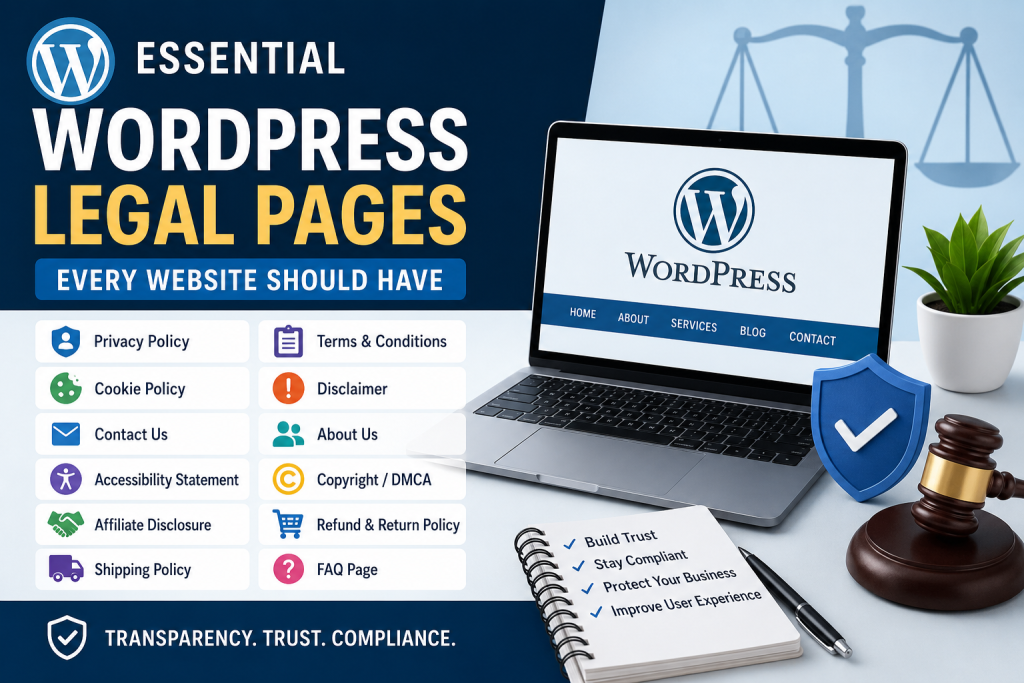
Essential Legal Pages Every WordPress Website Must Have
Installing WordPress is only the first step toward building a professional website. After choosing a theme, installing plugins, and creating your navigation menu, many website owners focus on publishing content immediately. However, one of the most important tasks is often overlooked: creating the legal pages your website needs.
Whether you run a personal blog, a business website, an online portfolio, or a WooCommerce store, having the correct legal pages demonstrates professionalism, builds trust, and helps comply with international privacy regulations.
Missing these pages can expose your website to unnecessary legal risks and may also reduce user confidence. Search engines and advertising platforms such as Google AdSense also expect websites to provide transparent information about their policies.
This guide explains every important legal page your WordPress website should include and why each one matters.
Why Legal Pages Are Important
Legal pages serve several purposes.
They explain how your website operates, how visitor information is collected, what users can expect, and what responsibilities both parties have.
Proper legal documentation helps:
- Build visitor trust
- Improve website transparency
- Support Google AdSense approval
- Comply with GDPR, CCPA, and other privacy laws
- Protect your business from legal disputes
- Improve overall website professionalism
Even a simple blog should include the essential legal documents.
Privacy Policy
The Privacy Policy is one of the most important pages on any WordPress website.
This page explains:
- What personal information is collected
- How data is collected
- Why data is collected
- How cookies are used
- Whether analytics software is installed
- Whether advertising networks collect information
- How users can request deletion of their personal data
If your website uses:
- Google Analytics
- Google AdSense
- Contact Forms
- Newsletter subscriptions
- WooCommerce
- Login systems
- Comment sections
then a Privacy Policy is mandatory in many jurisdictions.
What Should Be Included
A complete Privacy Policy normally covers:
Personal Information
Explain which information is collected.
Examples include:
- Name
- Email address
- IP address
- Browser information
- Device type
Cookies
Explain:
- Essential cookies
- Analytics cookies
- Marketing cookies
- Third-party cookies
Third-Party Services
List services such as:
- Google Analytics
- Google Fonts
- Cloudflare
- YouTube embeds
- Facebook Pixel
- Stripe
- PayPal
User Rights
Visitors should know they can:
- Access their data
- Correct their information
- Delete personal data
- Withdraw consent
Terms and Conditions
The Terms and Conditions page explains the rules for using your website.
It protects both you and your visitors.
Typical sections include:
- Acceptable use
- Intellectual property
- User responsibilities
- Copyright
- Account termination
- Disclaimer of warranties
- Limitation of liability
If you sell products or services, this page becomes even more important.
Cookie Policy
Many countries require websites to explain how cookies are used.
A Cookie Policy should describe:
- What cookies are
- Why cookies exist
- Which cookies are essential
- Which cookies are optional
- How visitors can disable cookies
- Cookie retention periods
Many websites combine this information with a cookie consent banner.
Disclaimer

A Disclaimer limits your legal responsibility.
The content depends on your website type.
Examples include:
- Educational content
- Financial advice
- Health information
- Technical tutorials
- Product recommendations
A typical disclaimer explains that the information is provided for educational purposes and should not replace professional advice.
Contact Page
Every professional website should provide an easy way for visitors to contact the owner.
A Contact page usually contains:
- Contact form
- Business email
- Business address (if applicable)
- Phone number (optional)
- Social media links
- Business hours
Google also considers contact information an important trust signal.
About Us
Although not legally required in every country, an About page is strongly recommended.
Visitors want to know:
- Who owns the website
- What the website is about
- Why it exists
- The experience behind the content
This page increases credibility and helps build authority.
Accessibility Statement
Accessibility is becoming increasingly important.
This page explains your efforts to make the website usable for everyone, including people with disabilities.
Topics often include:
- Keyboard navigation
- Screen reader compatibility
- Color contrast
- Responsive design
- Reporting accessibility issues
Some countries require accessibility information for certain organizations.
DMCA or Copyright Notice
Original content deserves protection.
A Copyright page explains:
- Ownership of website content
- Image usage
- Permission requests
- Copyright infringement reporting
- DMCA complaints
This is especially useful for blogs publishing original articles and media.
Affiliate Disclosure
If your website earns commissions through affiliate links, transparency is essential.
Explain:
- Affiliate relationships
- Commission disclosure
- Product recommendations
- Editorial independence
This disclosure helps comply with advertising regulations in many countries.
Refund and Return Policy
This page is required if you sell products or digital downloads.
It should explain:
- Refund eligibility
- Return periods
- Cancellation procedures
- Digital product policies
- Processing times
WooCommerce stores should never operate without this page.
Shipping Policy
Physical stores should include information about:
- Shipping locations
- Delivery times
- Shipping fees
- International shipping
- Lost packages
- Tracking information
Frequently Asked Questions
An FAQ page is not legally required but greatly improves the user experience.
Common questions might include:
- How do I contact support?
- How is my data protected?
- Do you use cookies?
- Can I delete my account?
- How do refunds work?
- Are affiliate links disclosed?
- How often is the website updated?
- Is the information professionally verified?
Error 404 Page
A custom 404 page helps visitors find their way when a page cannot be located.
Include:
- Search box
- Navigation menu
- Homepage button
- Recent articles
- Popular categories
While not a legal page, it improves usability and SEO.
Sitemap Page
A sitemap helps visitors navigate your content.
It commonly lists:
- Articles
- Categories
- Pages
- Archives
This differs from the XML sitemap submitted to search engines.
Which Pages Are Required for Different Website Types?
| Website Type | Recommended Pages |
|---|---|
| Personal Blog | Privacy Policy, Terms, Contact, About, Disclaimer |
| Business Website | Privacy Policy, Terms, Contact, About, Accessibility |
| WooCommerce Store | Privacy Policy, Terms, Cookie Policy, Refund Policy, Shipping Policy, Contact |
| Affiliate Website | Privacy Policy, Affiliate Disclosure, Terms, Disclaimer |
| Membership Website | Privacy Policy, Terms, Cookie Policy, Contact |
WordPress Plugins That Help Generate Legal Pages
Several plugins simplify creating legal documentation.
Popular choices include:
- WP AutoTerms
- Complianz
- CookieYes
- GDPR Cookie Compliance
- iubenda
- Cookiebot
These tools can generate templates, but you should always review and customize the content to match your website.
Common Mistakes Website Owners Make
Many beginners install WordPress and immediately start publishing articles without creating the necessary legal pages.
Other common mistakes include:
- Copying another website’s Privacy Policy.
- Forgetting to update legal documents after adding plugins.
- Not disclosing affiliate links.
- Missing cookie consent.
- Providing outdated contact information.
- Ignoring GDPR requirements.
- Using generic templates without customization.
Taking the time to create accurate legal pages from the start saves time and reduces future risks.
Frequently Asked Questions
Do all WordPress websites need a Privacy Policy?
Yes. If your website collects any visitor data, including analytics or contact form submissions, a Privacy Policy is strongly recommended and often legally required.
Is a Terms and Conditions page mandatory?
Not always, but it is highly recommended because it defines the rules for using your website and provides legal protection.
Do I need a Cookie Policy?
If your website uses cookies, especially for analytics or advertising, you should have a Cookie Policy.
Is an About page legally required?
No, but it helps establish trust and credibility with your audience.
What if I use Google AdSense?
Google AdSense requires websites to provide transparent privacy information and comply with applicable privacy regulations.
Can I copy another website’s legal pages?
No. Every website has different practices, services, and legal obligations. Your legal pages should reflect your own operations.
Should WooCommerce stores have refund policies?
Yes. A Refund and Return Policy is essential for any online store selling products or services.
Do legal pages improve SEO?
While they are not direct ranking factors, they enhance trust, transparency, and overall site quality, which can indirectly benefit SEO.
How often should legal pages be updated?
Review them whenever you add new services, plugins, advertising platforms, or data collection methods, and perform a full review at least once a year.
Building a Trustworthy Website Starts Here
Creating legal pages is just as important as choosing the right theme or installing plugins. These documents demonstrate transparency, protect both you and your visitors, and help ensure compliance with privacy laws and platform requirements. By adding the essential pages from the beginning, you lay the foundation for a professional, trustworthy, and sustainable WordPress website.
⚠️ Disclaimer and Source Hygiene
This article is provided for informational and educational purposes only and should not be considered legal advice. Laws and regulations vary by country and may change over time. Consult a qualified legal professional to ensure your website complies with all applicable laws and regulations.
🔔 For more tutorials like this, consider subscribing to our blog.
📩 Do you have questions or suggestions? Leave a comment or contact us!
🏷️ Tags: WordPress, WordPress Legal Pages, Privacy Policy, Terms and Conditions, Cookie Policy, GDPR, Website Compliance, WordPress Tutorial, Website Security, Google AdSense
📢 Hashtags: WordPress #WebsiteCompliance #GDPR #PrivacyPolicy #CookiePolicy #WordPressTutorial #SEO #GoogleAdSense #WebDevelopment #Blogging
Sources and References
Primary Sources
- WordPress Privacy Handbook
- General Data Protection Regulation (GDPR)
- Google AdSense Program Policies
- Google Search Central Documentation
- European Commission – GDPR Information
- California Consumer Privacy Act (CCPA)
Secondary Sources and Testimonials
- WordPress developer best practices
- Website compliance guides
- Privacy and cybersecurity professionals
- Digital marketing and SEO experts