
Table of Contents
Choosing the right blog niche is the foundation of a successful website. Discover what a blog niche is, why it matters for SEO, audience growth, and monetization, and learn practical steps to choose a niche that you can confidently build for years.
Successful Blog
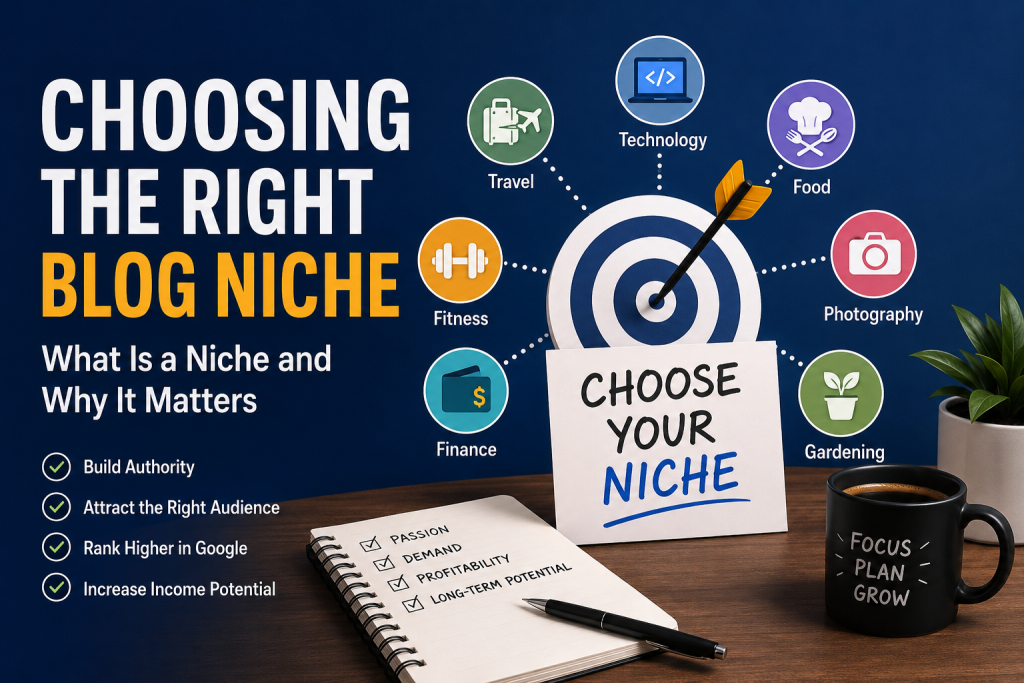
Every successful blog starts with one important decision: choosing the right niche.
Many first-time bloggers focus on buying a domain name, installing WordPress, selecting a theme, or publishing their first article. While these steps are important, they are meaningless if your website has no clear direction.
A blog without a niche is like a bookstore without categories. Visitors don’t know what to expect, search engines struggle to understand your website, and creating consistent content becomes increasingly difficult.
Whether you plan to build a personal blog, a professional resource, or an online business, selecting the right niche gives your website purpose. It helps attract the right audience, improves search engine rankings, and creates opportunities to earn revenue over time.
This guide explains everything you need to know about blog niches, why they matter, and how to choose one that fits both your interests and your long-term goals.
What Is a Blog Niche?
A blog niche is the primary topic or subject your website focuses on.
Instead of writing about every topic imaginable, a niche allows you to specialize in one particular area.
For example, rather than creating a general website about technology, you might focus specifically on:
- WordPress tutorials
- Website security
- Web hosting
- Search engine optimization
- WooCommerce
- Website performance
Likewise, instead of covering every health-related topic, you could specialize in:
- Weight loss
- Healthy recipes
- Home workouts
- Mental wellness
- Nutrition
Your niche defines your audience, your content strategy, and ultimately your brand.
When someone visits your website, they should immediately understand what your content is about.
Why Choosing a Niche Matters
One of the biggest mistakes new bloggers make is trying to write about everything.
Today they publish a WordPress tutorial.
Tomorrow they review smartphones.
Next week they write about movies.
A few days later they share a travel guide.
Although this approach may seem creative, it usually creates confusion.
Visitors don’t know why they should return.
Google struggles to understand what your website specializes in.
As a result, ranking high in search results becomes much more difficult.
Successful websites usually have one thing in common:
They consistently publish content around related topics.
That consistency builds trust with both readers and search engines.
How Search Engines Understand Your Website
Google doesn’t simply rank individual articles.
It also evaluates the overall expertise of your website.
When dozens or hundreds of articles revolve around similar subjects, Google begins recognizing your website as an authority in that field.
This concept is often called topical authority.
For example, imagine two websites.
The first publishes articles about:
- WordPress
- Cars
- Pets
- Football
- Movies
- Politics
The second publishes articles about:
- WordPress installation
- WordPress themes
- Plugin reviews
- Security tutorials
- WooCommerce
- Performance optimization
- SEO
Which website appears more trustworthy for someone searching for WordPress advice?
The answer is obvious.
Google generally prefers websites that consistently demonstrate expertise within a specific subject.
The Benefits of Choosing the Right Blog Niche

Better Search Engine Rankings
Search engines reward websites that consistently publish related content.
When your articles naturally connect with one another, they create topical relevance.
Internal linking becomes easier.
Keyword clustering becomes more effective.
Your authority grows with every new article.
Instead of competing in hundreds of unrelated topics, your website gradually dominates one category.
A Clear Identity
Every successful website has a recognizable identity.
When someone mentions your website, readers should instantly associate it with one main topic.
Examples include:
- WordPress tutorials
- Travel advice
- Home gardening
- Personal finance
- Photography
A clear identity also makes branding easier.
Visitors remember focused websites far better than general blogs.
More Loyal Readers
People subscribe because they know what to expect.
Someone interested in WordPress wants more WordPress content.
Someone interested in fitness wants fitness articles.
Consistency creates trust.
Trust creates returning visitors.
Returning visitors eventually become loyal readers.
Easier Content Planning
One common challenge beginners face is finding new article ideas.
A niche solves this problem naturally.
If your website focuses on WordPress, potential articles include:
- Plugin comparisons
- Theme reviews
- Speed optimization
- Security guides
- WooCommerce tutorials
- Elementor tips
- Gutenberg tutorials
- Hosting comparisons
- AI tools for WordPress
- Backup strategies
Instead of constantly wondering what to publish next, your niche provides an endless list of relevant topics.
Higher Monetization Potential
Focused audiences are much easier to monetize.
Visitors interested in WordPress are also interested in:
- Premium themes
- Managed hosting
- SEO plugins
- Backup solutions
- Security plugins
- Online courses
This creates excellent opportunities for:
- Google AdSense
- Affiliate marketing
- Sponsored content
- Digital products
- Membership websites
- Consulting services
What Makes a Good Blog Niche?
Not every niche leads to long-term success.
A strong niche usually shares several important characteristics.
You Enjoy Writing About It
Blogging requires consistency.
You’ll likely write hundreds of articles over several years.
If you dislike the subject, staying motivated becomes difficult.
Choose a topic that genuinely interests you.
People Search for It
Even the best content won’t attract visitors if nobody searches for the topic.
Research demand using keyword research tools.
Popular options include:
- Google Trends
- Google Keyword Planner
- Ahrefs
- SEMrush
- Ubersuggest
Look for steady, long-term interest rather than temporary trends.
It Offers Monetization Opportunities
Before launching your blog, consider how you might eventually generate income.
Ask yourself:
- Are there affiliate programs?
- Can I display advertisements?
- Are digital products available?
- Could I create online courses?
- Would businesses sponsor content?
If the answer is yes, your niche has strong commercial potential.
It Supports Long-Term Content
Avoid choosing topics that only support a handful of articles.
Instead, select niches capable of producing hundreds of useful resources.
WordPress is an excellent example.
Possible content categories include:
- Hosting
- Themes
- Plugins
- Security
- Performance
- WooCommerce
- SEO
- AI
- Troubleshooting
- Backups
- Custom development
Each category contains dozens of article ideas.
Broad Niches vs. Micro Niches
A broad niche targets a large audience.
Examples include:
- Technology
- Health
- Finance
- Travel
A micro niche focuses on a smaller, more specific audience.
Examples include:
- WordPress Security
- WooCommerce Optimization
- Solo Travel in Europe
- Indoor Vegetable Gardening
Micro niches often have less competition and allow new websites to build authority much faster.
Once your website grows, expanding into related topics becomes much easier.
Popular Blog Niche Ideas
Some niches remain popular year after year because they solve ongoing problems.
Examples include:
WordPress
Perfect for tutorials, plugins, hosting, themes, SEO, and performance optimization.
Personal Finance
Budgeting, saving money, investing, and passive income remain evergreen topics.
Health and Fitness
Workout routines, nutrition advice, and healthy lifestyle content attract consistent interest.
Travel
Travel guides, hotel reviews, and destination recommendations continue performing well.
Technology
Product reviews, software tutorials, and buying guides generate strong traffic and affiliate revenue.
Home Improvement
DIY projects, smart home technology, and renovation tips appeal to homeowners worldwide.
Common Mistakes New Bloggers Make
Trying to Write About Everything
General blogs rarely develop authority.
Focus first. Expand later.
Following Temporary Trends
Trending topics create short bursts of traffic.
Evergreen content continues attracting visitors for years.
A balanced strategy often works best.
Ignoring Competition
Competition isn’t always bad.
It usually means there is demand.
Instead of avoiding competitive niches completely, look for underserved subtopics.
Choosing Money Over Interest
Some niches pay extremely well.
However, if you dislike the topic, maintaining a publishing schedule becomes difficult.
Passion and profitability should work together.
How to Validate Your Niche Before Launching
Before publishing your first article, spend time validating your idea.
A few hours of research can save months of frustration later.
Consider these steps:
- Search Google for your main keywords.
- Analyze successful competitors.
- Explore Reddit and Quora discussions.
- Read Facebook groups in your niche.
- Use keyword research tools.
- Create a list of at least 100 future article ideas.
- Identify possible affiliate products.
- Check whether advertisers already target the niche.
If all signs point toward consistent demand, you’ve likely found a strong niche.
Example: Why a Focused Blog Wins
Imagine two bloggers starting today.
The first writes about everything that interests them.
Their website contains articles about:
- Football
- Cars
- Dogs
- Recipes
- Smartphones
- Movies
The second focuses entirely on WordPress.
Within a year they publish articles covering:
- Installation guides
- Security tutorials
- Theme reviews
- Plugin comparisons
- SEO
- WooCommerce
- Website speed
- Backups
Although both bloggers publish the same number of articles, the second website is much more likely to rank well because every article strengthens the site’s authority within one subject.
Why WordPress Is an Excellent Blogging Niche
WordPress powers millions of websites worldwide, making it one of the largest evergreen blogging niches.
New plugins, themes, updates, and security practices create fresh content opportunities every month.
A WordPress-focused website can cover topics such as:
- Installation
- Themes
- Plugins
- Performance optimization
- Website security
- WooCommerce
- SEO
- AI integrations
- Website maintenance
- Troubleshooting
- Hosting
- Page builders
Because the ecosystem constantly evolves, you’ll never run out of useful content ideas.
Frequently Asked Questions
What is a blog niche?
A blog niche is the primary topic your website focuses on, helping attract a targeted audience and establish expertise.
Why should I choose one niche?
A focused niche improves SEO, builds trust with readers, and makes content planning much easier.
Can I write about multiple topics?
Yes, but they should be closely related to maintain topical authority.
Is a small niche better than a broad one?
For most beginners, a focused niche is easier to grow because competition is often lower.
Can I change my niche later?
Yes, although changing direction may affect your rankings and audience. Careful planning from the beginning is recommended.
How do I know if my niche is profitable?
Research affiliate programs, advertising opportunities, search demand, and competitor websites.
How many articles should my niche support?
Ideally, your niche should allow you to publish at least 100 to 300 high-quality articles.
Is WordPress a profitable niche?
Yes. WordPress offers opportunities through affiliate marketing, advertising, premium products, and educational content.
Does Google prefer niche websites?
Google generally rewards websites that demonstrate expertise and topical authority within a particular subject.
Should passion or profit come first?
The best niche combines both. Choose something you enjoy that also has consistent demand.
Building a Blog That Lasts
Choosing the right blog niche is one of the most important decisions you’ll make as a blogger. A focused niche provides direction, strengthens your brand, improves your chances of ranking in search engines, and helps you attract readers who genuinely care about your content. Instead of trying to appeal to everyone, concentrate on becoming the best resource within one area. As your expertise grows, your website can naturally expand into related topics while maintaining the authority and trust you’ve worked hard to build.
⚠️ Disclaimer and Source Hygiene
This article is for educational and informational purposes only. Blogging results vary depending on your content quality, SEO strategy, consistency, competition, and audience engagement. Always consult official documentation and trusted industry resources when making decisions about your website or online business.
🔔 For more tutorials like this, consider subscribing to our blog.
📩 Do you have questions or suggestions? Leave a comment or contact us!
🏷️ Tags: blog niche, blogging, WordPress blogging, SEO, niche website, content marketing, blogging tips, affiliate marketing, website growth, beginner blogging
📢 Hashtags: #WordPress #Blogging #SEO #ContentMarketing #BlogNiche #AffiliateMarketing #WebsiteGrowth #DigitalMarketing #BlogTips #WPZone
Sources and References
Primary Sources
- Google Search Central Documentation
- Google Search Quality Evaluator Guidelines
- WordPress.org Documentation
- Google Trends
- Google Keyword Planner
Secondary Sources and Testimonials
- Ahrefs Blog
- SEMrush Blog
- Moz Learning Center
- Search Engine Journal
- Backlinko